Sights in Avignon — 14 of Our Favourites

Discover and book the top Avignon sights

Coca Cola Museum, Avignon

1. Coca-Cola Museum

Location
Avignon

Collector Michel Houche, has filled his house in Avignon, with over 4000 different pieces of Coca Cola memorabilia, creating a unique collection which tells an interesting story behind the brand.

Find out where the original recipe was concocted, where the coulour came from and the truth behind the Santa & Coke.

Entrance is €5 and you will need reserve in advance.

Angladon Museum, Avignon

2. Angladon Museum

Location
Avignon

Located in a gorgeous 18th century building int eh centre of Avignon, this museum's mission is to share with the public the wonderful collection of paintings and furniture inherited from the couturier Jacques Doucet (1853-1929).

Doucet was in his own right, a pioneer of fashion and a patron of the arts and the collections gives visitors the chance to view some of the best of modern art.

Opening hours

  • From April 1st to September 30th, Tuesday through Sunday, 13:00 - 18:00
  • From October 1st to March 31st, Tuesday through Saturday, 13:00 - 18:00
  • Closed on December 25th and all January long
  • Guided visits in English or special privatisations on request
  • Groups on reservation

Prices

  • Full price: 8 €
  • Reduced price: 6.5 €
  • Young people from 15 to 25: 3 €
  • Children from 4 to 14: 1.5 €
  • Children under 4: free
watercolour of building

3. Musée Calvet Fine Art and Archeology

Location
Avignon

The Calvet Museum today houses works of art from the 16th to 20th century, and holds innumerable collections donated or bequeathed by patrons, art lovers and collectors, such as Baron de Montfaucon, Esprit Requien, Noël Biret, the Montlaur family, and recently Marcel Puech.

The importance of its collections has led the Calvet Museum to be considered a "Museum of France". It counts tens of thousands of items on its inventory, which belong to fields as diverse as archaeology, the fine arts (paintings, sculptures, drawings), the decorative arts (gold and silverware, earthenware and porcelain, tapestry, ironware) and ethnology (Asia, Oceania, Africa).

a grand palace in Avignon

4. Petit Palais museum

Location
Avignon

The Petit Palais museum owes its name to the familiar name of the Archbishops Palace in which it is installed, name that it was given by reference to the great neighbouring palace: the Palais des Papes.

The museum houses a number of permanent collections of Italian painters, local sculptors and painters from the school of Avignon, as well as a number of temporary collections and exhibitions.

There is a tea room on site, you can enjoy a snack and a rink in the courtyard, which is open from 10:00 - 18:00 except Tuesdays.

Admission price:

6 euros or 3 euros per person in a group of 10.

Requien Museum of natural history, Avignon

5. Requien Museum of natural history

Location
Avignon

This museum owes its growth to the naturalist Esprit Requien (1758-1851), who was the most famous of Avignon scientists of his time. From an old middle class family, he devoted himself early to botany. By age 18, he is active in the Botanical Garden of the city of Avignon and is a herbarium that quickly acquired great importance.

Requien was interested in almost all of the world of science, including paleontology and malacologie branches for which it is also rich collections. He was in contact with leading scientists of his time and 75 new species were dedicated to him.

The collection contains around 400,000 samples of botany, 416,150 of geology, 1,077 vertebrates and 45,300 invertebrates.

As well as its permanent collection the museum also houses a number of temporary exhibitions throughout the year.

The museum is open from Tuesday to Saturday from 10:00 - 13:00 and 14:00 - 18:00 except on 1st January, 1st May & 25th December.

Free entry.

photo of a grand mansion house

6. Collection Lambert

Location
Avignon

The Collection Lambert is a wonderful gallery featuring modern art from the 1960's.

Three exhibitions are organised each year which enhance the 'permanent loan' collection of Yvon Lambert. Minimal art, conceptual art, land art, and more recently, figurative painting and photography, provide the main focus for the gallery. Look out for works by Cy Twombly, Robert Ryman, Andres Serrano and Sol LeWitt, amongst many others.

stone walls and a path leading to a fortress

7. Chartreuse du Val de Benediction, Villeneuve les Avignon

Location
Avignon

This Carthusian monastery heralds back to the 14th century when it was built for Pope Innocent VI. The monastery consisted of a church and three cloisters which made it the largest monastery in France.

During the Revolution, the monastery suffered terrible damage but it has since been lovingly restored. With monks cells, kitchen, a chapel and pretty gardens to see, you can wander around yourself or take a guided tour.

The Chartreuse is home to playwrights and artists who can lodge here for free for up to a year.

Tour Philippe le Bel, Villeneuve les Avignon

8. Tour Philippe le Bel, Villeneuve les Avignon

This impressive tower was built in the early 13th century and served to defend the bridges over the Rhone in Villeneuve les Avignon.

Inside there are three floors with vaulted ceilings and a watchtower perches right on top.

Tickets only cost around 2-3 euros per person or if you have an Avignon city pass it's included in this.

photo of a cathedral

9. Cathedral Notre Dame des Doms

Location
Avignon

With the arrival of French pope Clement V, Avignon was transformed into a religious and artistic centre. The grand Notre Dame cathedral has existed since the twelfth century, but the current building has been subjected to a number of alterations. The eye-catching gold statue of the Virgin Lady on the top of the tower is six metres in height and weighs 4,500 pounds.

The name of this cathedral "Notre-Dame des Doms" comes from the latin Domus episcopali meaning "from the Bishop's house". Historians tend to believe that from the 4th century onward there was here a basilica and close to it the bishop's residence. Destroyed by the Saracens in 731, it was rebuilt and consecrated on October 8, 1111.

In recent years, the cathedral, which belongs to the French state like all existing churches built prior to 1905, has been restored and enhanced in more than one way. For example the carillon now includes 35 bells ringing liturgical melodies all year long.

The cathedral also holds two organs :

  • On the one hand the Italianate gilded organ in the gallery was built by Lodovico Piantanida from Lombardy. It was restored in 2005 by "Fabrica d'organi Mascioni" from Azzio (Province of Varese, Italy).
  • On the other hand, there is in the choir a 1902 organ by Cavaillé-Coll which was restored in 1954 by Puget of Toulouse, France.

In the chapel devoted to Jean XXII, you will find various priceless religious objects, reliquaries and vestments belonging to the diocese of Avignon.

Masses are held daily, early morning during the weeks at around 8:00am and at 10:00am on Sundays.
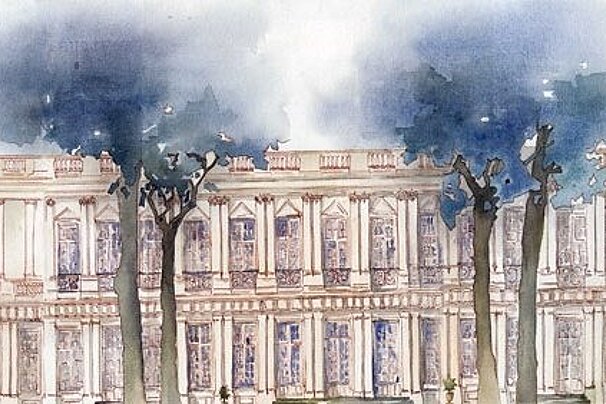
photo of a park

10. Rocher des Doms

Location
Avignon

Located in the heart of Avignon, these wonderful gardens provide great views over the city and a place to escape for an hour or two of peace and quiet. With a pond, fountain and swans, and lush vegetaion it is a charming place to unwind.

There is a picnic spot, restaurant and playground area for children.

a walk way on an island along the river

11. Ile de la Barthelasse

Location
Avignon

The perfect setting for a Sunday walk or a family bike ride is just a short ferry trip away from the city centre of Avignon on the Ile de la Barthelasse.

The Barthelasse island lays between two river arms and is spread over 700 hectares. Being riddled with little roads and paths makes this a very pleasant place to walk, run or bike around.

"When Avignon's medieval popes needed a break from the hubbub of their walled city, they crossed a bridge to this island in the middle of the Rhone River. Centuries later, Ile de la Barthelasse and adjoining Ile de Piot--whose vineyards, vegetable gardens, and pear, apple, and cherry orchards cover more than half of their nearly three total square miles--still make for a wonderful getaway."

There are also plenty watersports available around the island with kayaking, jet skiing and swimming.

photo of a fort towers in Avignon

12. Fort St Andre & Abbaye St Andre, Villeneuve les Avignon

Location
Avignon

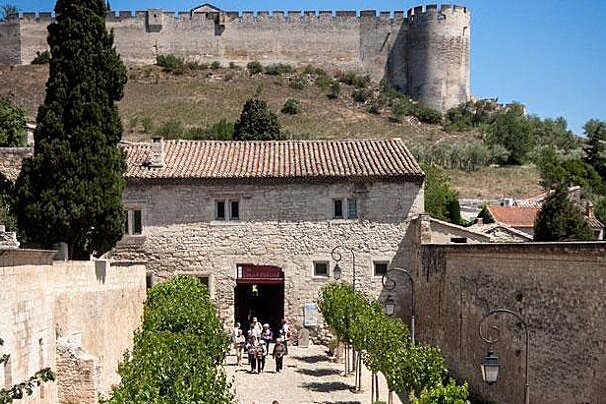
The 14th century Fort St Andre was built by order of the King of France, Philippe le Bel as a mean to keep an eye on the papal city of Avignon. Perched on a hill, this impressive structure contains the ruins of the Abbaye St Andre.

There are beautiful gardens inside the Abbey with terraces, rosebeds and a pergola. The views of the Rhone Valley and Avignon are spectacular. The Fort is open to the public throughout the year for a small fee.

photo of half a bridge and a river

13. Pont St Benezet

Location
Avignon

This famous bridge was first built to link the old town of Avignon to land across the wide River Rhone in Villeneuve Les Avignons. The original bridge ('pont') was built in the 12th century and stretched for around 900m and contained 22 arches.

The story goes that a shepard boy was told by God that it was his will to build a bridge in Avignon. The townspeople originally laughed at him, until the boy hefted a large stone onto his back and laid it in the river as the bridge's first stone. The bridge was the inspiration for the 15th century children's nursery rhyme 'Sur le pont d'Avignon' which now has worldwide recognition.

The bridge has since been destroyed by the flooding river and then rebuilt several times before reconstruction was finally abandoned in the 17th century. Only four arches remain today, but you can buy tickets to walk along the narrow footpath and use your imagination to think how it must have looked in its full glory.

photo of a historic building

14. Palais des Papes

Location
Avignon

This magnificent building was built for Pope Benedict III in 1335 as a residence and a 'grand project'. It's the largest Gothic palace in the world (at 15,000 square metres) and is in the top ten most visited monuments in France (over 650,000 visitors per year).

During the first twenty years of construction, the 'Tower of Angels' and the Great Chapel were built along with a cloister and two stout towers for defence purposes.

Pope Clement VI added more towers, the Great Audience Hall and the Honour Courtyard ten years later. The palace is full of frescoes, hidden staircases, terraces, apartments and chapels.

The Palais des Papes hosts many cultural events throughout the year.