Tour & Excursion reviews in Provence — 9 of Our Favourites

Read reviews of the best Provence tours

Gorges de Verdon Driving Tour

1. Gorges de Verdon Tour

The Gorges du Verdon, widely known as the Grand Canyon of Provence, with awe-inspiring views and vivid turquoise waters, are well worth a visit.

The Gorges du Verdon are easily accessible from most parts of the French Riviera and the Alpes de Haute-Provence. We set off from the Provencal towns of Moustiers Sainte-Marie after checking in overnight to sample some of the hotels and local cuisine in the narrow medieval streets and vaulted passages.
An equally good starting point for the tour is from Manosque where you’ll also find the famous L'Occitane factory.

The driving tour started early with the aim of reaching a viewpoint for a breakfast stop and back down to the lake for a leisurely lunch and a swim.

Heading towards Aiguines on the southern side of the Gorges, cruise up the D71, a small vertiginous road that overlooks the Verdon river and has a number of panoramas en route.

Driving past the Col d'Illoire, expect to see a great view back down onto the end of the Gorges du Verdon (at the Pont du Galetas) and also of the Lac de Sainte Croix. Continuing up the gorge, you can admire more views from the Cirque de Vaumale, Falaise de Baucher and the Falaise des Cavaliers.
Past the Fayet tunnel you will arrive at the Pont de l'Artuby (the bungee jump Mecca) so expect to see a few scared individuals approaching the edge.
Then come the Balconies of the Mescla, another prime viewpoint.

At this point we turned back to ensure sufficient lounge time on the beach of Lake of Sainte-Croix however you can carry on up towards Comps sur Artuby then loop back via the ridge road that passes through Trigance, Rougon and La Palud sur Verdon for full days drive.

Domaine de la Royrie Olive Groves, Grasse

2. Domaine de la Royrie Olive Groves, Grasse

Location
Grasse

Learn about the cultivation of olives in this ancient olive grove which was planted in the 15th century.

Take the guided tour which lasts around an hour and a quarter. You can have the tour in English or French.

Visit the medieval garden, the olive groves, the museum of rural life, the medicinal garden and the 18th century peasants houses.

Price 10 euros per person.

When you've finished the tour there is a shop on site from where you can purchase olive oil, books and other local produce to take home.

Mont Sainte-Victoire Vinyards

3. Tour of the Mont Sainte-Victoire

Touring the Mont Sainte Victoire is a perfect escape from Aix-en-Provence to see a wild side of Provence, share some of Cesanne's views and taste some fine wines en route.

By car, by foot or on two wheels the majestic Mont Sainte Victoire and the surrounding landscape is worthy of exploring on a day trip from Aix.

The area known as the Grand Site Sainte Victoire covers an immense stretch from the Mediterranean to the Alpine mountains but the main focus is the Montagne Sainte-Victoire which peaks at 1,011 metres and sprawls over both the Bouches-du-Rhône and the Var.

Setting off in the comfort of an air conditioned car under clear blue skies, leaving Aix in the direction of Vauvenargues on the D10 to circumnavigate the Sainte Victoire. Although you can travel in either direction, we suggest going clockwise to experience the vineyards and view of the stunning south face at the end of the day.

A scenic drive around the Cezanne route will take you a half day if you travel at a leisurely pace and enjoy a few stops along the way, which could include:

  • Bibémus Quarries - the Carrières de Bibémus are old ochre sandstone quarries which gave much inspiration to Cezanne. Visit takes 1 hour & not suited for people in wheelchairs or with walking difficulties.
  • Jardin des 5 Sens - a peaceful, colourful & aromatic garden in Saint Marc Jaumegarde.
  • Vauvenargues - pretty little village with a selection of restaurants and information centre for hiking advice
  • Domaine de Saint Ser & Domaine Sainte Lucie - Pretty vineyards just below the rocky face of the Sainte Victoire, stop off to try & bag some fabulous rosés
  • Moulin de Cezanne - an old mill has been converted into a free art gallery just at the entrance to Tholonet
  • La Table de Beaurecueil or the Saint-Esteve - are two well regarded restaurants which would be an ideal place to finish the day

For those seeking a more sporty approach there are numerous walking trails on the Mont Sainte Victoire, be sure to pick up a map of the trails available at the information points at Vauvenargues or Saint Antonin sur Bayou to choose a hike based on your level of fitness and amount of time.

Be aware that during the summer months, due to the fire risk, access is restricted between 1 June and 30 September. Depending on the level of risk the routes could be closed after 11am or closed altogether - be sure to check on the morning of your departure. Cyclists can find their bonheur in either completing Le tour du Mont Sainte Victoire which is a two to four hour circuit with a number of climbs, or by taking on one of the adrenaline pumping mountain bike trails.

Electric Bikes in Provence

4. Electric Bike Tour of Provence

As we have already revealed galloping along the Alpilles on horseback is a jolly good way of touring the stunning scenery that this Parc Naturel has to offer, but for a more modern (lazy) approach there is an alternative - the electric bike.

Electric bikes are cropping up on more and more street corners, and Saint Remy de Provence is no exception with Sun e Bike having opened their second electric bike shop in the area.

Sun e Bike launched their electric only bike rental shop in Bonnieux last year and following a successful season have branched out into St Remy, which offers a great base to explore the ancient towns & abbeys and the olive groves & farmlands that the Alpilles has to offer.

Starting just before lunch and with batteries fully charged (bikes and our own), we loaded panniers with cameras, baguettes and a Chevre Frais for good measure. With a wobbly start we set off in the direction of Les Baux de Provence. I’ve done my share of biking and I’m not an electric bike newbie but this was the first time I had set off to tackle 50+ kms of cycling without 21 gears or cycle shorts, but I felt reassured when my bike partner informed me she hadn’t been on a bike in over four years. I sensed we were in for a long day...

But within a short space of time and a surprisingly sweat free 200 metre climb we had reached our first stop; Les Baux de Provence, one of the loveliest hilltop medieval villages I have come across. The electric bikes have a range of speed settings and only kick in when you are pedalling, giving you the boost when you need it, like cycling with someone giving you a gentle push up the hill.
A smug smirk soon appeared on our faces as we saw queues of cars trying to park down the road whilst we rode into the medieval village like a pair of privileged nobles, albeit on electric bikes..

We sadly skipped the visit of the Chateau des Baux and the Carrieres de Lumieres and sufficed with a stroll around the village shops & art galleries, nevertheless would recommend a return visit to the Carrieres de Lumieres - a converted quarry which hosts audio-visual art installations.

Switching the motors off we free-wheeled down towards Maussane where we grabbed a few extra bits for the picnic, noting a few bistros that would be worth a stop for next time. Pedalling on we were soon surrounded in olive groves and rolling hills which made for a picture perfect picnic stop.

Next point on the map was Eygalières, so after another easy climb up and over the Alpilles, we descended on this beautiful village where we parked the bikes and explored the village on foot. The main street has a selection of quaint cafes, restaurants and art & deco shops, and at the end of the street a rise which gives some great views of the surrounding farmland.

Back on the bikes for the last and flattest part of the tour which took us along a quiet road which bordered on vineyards and apple orchards. At this point we had run our first battery flat (Sun e Bike have partnered with restaurants int the area giving a great network of places to swap bike batteries and recharge your own if needed) but as the day had been so easy we decided not to swap the spare battery over and just pedal, whilst soaking up the views and fragrant smells of the Provence..

Cycling for Softies Key facts

  • Electric bikes are available to hire throughout Provence
  • Sun e Bike have shops in the Luberon and the Alpilles with 14 suggested itineraries
  • Baby seats and child trailers are available on demand
  • Picnics are not de rigeur but water and sunscreen are
  • Day rates are €35 per day and less for longer hire
Vintage Road Trip 2CV

5. Vintage Road Trip Touring Provence

Touring Provence by car is a must, exploring the scenic villages of the Luberon in a topdown vintage Citroen 2CV is a dream!

Fortunately this dream is a reality thanks to Vintage Road Trips, who offer a range of vintage vehicles, from charming Citroen 2CV's to punchy Porches', for hire in Provence.

We met with the friendly team in a little village just west of Aix en Provence early morning to take first pick of their range of vintage vehicles - wanting something indiscreet we went with a roll top, kermit coloured, flat twin Citroen 2CV. Armed with a camera, road map and a very detailed guide book provided by the owners we set off in search of a vintage Provence to match the car that can easily be found in the nearby Luberon.

Vintage Road Trips provide a number of suggested itineraries to best explore Provence (Cote d'Azur, Luberon or the Mont Saint Victoire) which they have gone to great efforts to produce; the guides provide all the details of the road ahead, the history of the villages and even offer some honest advice on where to stop en route.
After coffee and a croissant in Lambesc admiring our fine new motor (and we were not alone - these things are a smile-magnet) we headed north for our first vintage village stop in Lourmarin, a chic little village with boutique-lined little streets now very popular thanks to it's proximity to the Avignon TGV station.

The Chateau de Lourmarin should be the first stop on a sightseeing trip but if you prefer browsing the boutiques then the village has lots to offer. After a leisurely lunch we decided to press on, with a number of villages still yet to visit, next up was Bonnieux.

Bonnieux is 'another' hill top village with 'another' fantastic view and more pretty lanes to get lost upon, the village itself looks as if it has unravelled down the hillside. Soon we were winding up the quiet alleys towards the Lacoste chateau, former home to the infamous Marquis de Sade and now owned by Lacoste like fashion designer Pierre Cardin. Needless to say the rich heritage of this chateau makes it well worth a visit - particularly during the opera festival in July.

Following the itinerary round our 2CV takes us through the villages of Vaugines, Cucuron & Ansouis for more sights but this time we don't stop as the sun is getting low in the sky signalling aperitif o'clock...

a famous cafe that van gogh painted

6. Walking Tour of Van Gogh's easels in Arles

The history of Van Gogh is exposed with a flourish all around Arles as the artist completed some particularly famous paintings while living in the town. This walking tour brings you step by step to each of the places where Van Gogh would have set up his canvas to paint using the renowned Provençal sunlight.

The walking-tour takes you along the winding streets of Arles and out along the Rhône River. It should take around an hour and a half to walk the route, although there are opportunities to stop for a break and soak up the scenery. The loop also takes you past the Musée Réattu and the Van Gogh Foundation so allow extra time if you wish to stop and explore either of these exquisite museums.

The beauty about the tour is that you can start it from anywhere you desire once you have the map and are aware of what the stone easels will look like. I had to double back once or twice after having missed one or two of them, but once I knew what to look for it was no-problem.

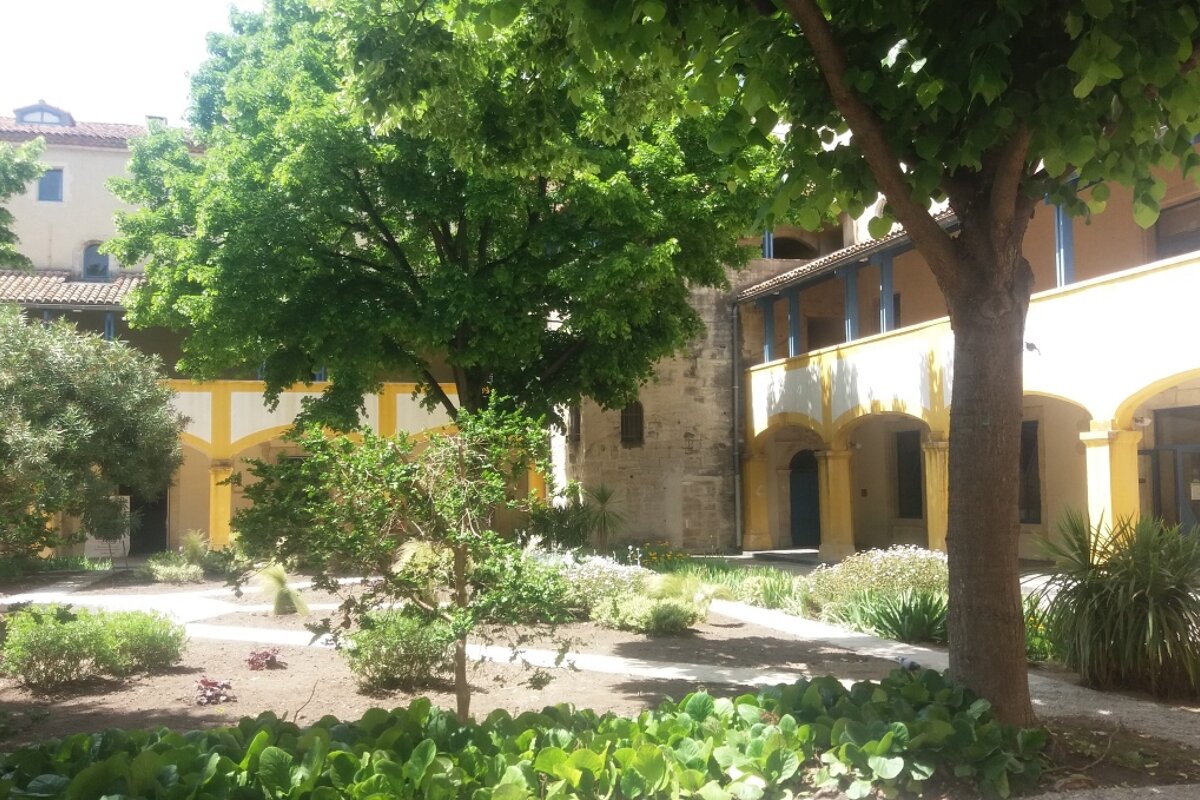
Arles possesses some of the quaintest buildings I have seen in France; the narrow streets and cobble stoned roads feel special and inspiration seeps from everything. My first stop is at the garden of the hospital in Arles where Van Gogh was interned after cutting his ear. The sunlight beams in and illuminates the yellow paint on the balconies overhead while the courtyard basks in the heat. The garden is simple yet well-tended and a few other tourists mill around trying not to spoil the experience for each other by being too intrusive.

cafe van gogh

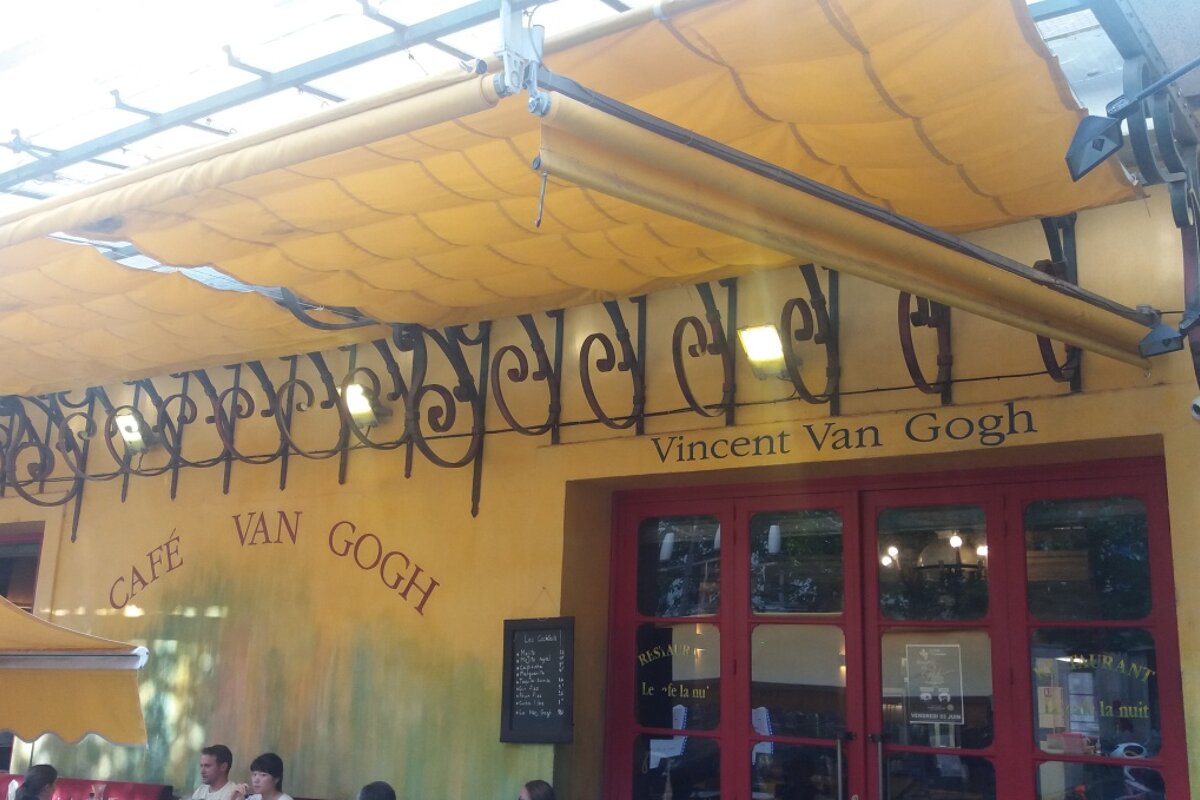
The next stop is Café Terrace at Night a well-known painting in Place du Forum. I stopped at the café itself for a coffee as it was still quite early in the morning, but if you plan your self-guided walking-tour you could visit here at lunch time and try one of the many great restaurants in the square before moving on.

The tour takes you up past the Van Gogh Foundation, which I thought was so interesting that I spent a full afternoon inside, before heading out onto the wide banks of the Rhône where there are three easels, each from a different vantage point that the great artist painted from. Other people seem to be following the same tour as me, or maybe they have stumbled upon the stone easels by chance and are taking a moment to learn something of this charming city, either way the paintings draw people to them.

a garden

The arena is another stop on the walking tour and the painting here invites us to imagine what the crowd must be like on a busy day during a festival or bull-fight. The arena itself is well worth a visit while you are in Arles and it holds a few mysteries up its sleeves.

My own personal favourite sight on the tour was the public park which was the subject of Van Gogh’s painting simply titled “Entrance to the Public Garden, Arles”. The park is small, but has just enough privacy that you can find a little spot and pull out a book to read as you rest your feet. The bust of Van Gogh situated at the entrance is spectacular and I’m sure that during his time spent living here the artist never thought there would be this much appreciation for him in Arles.

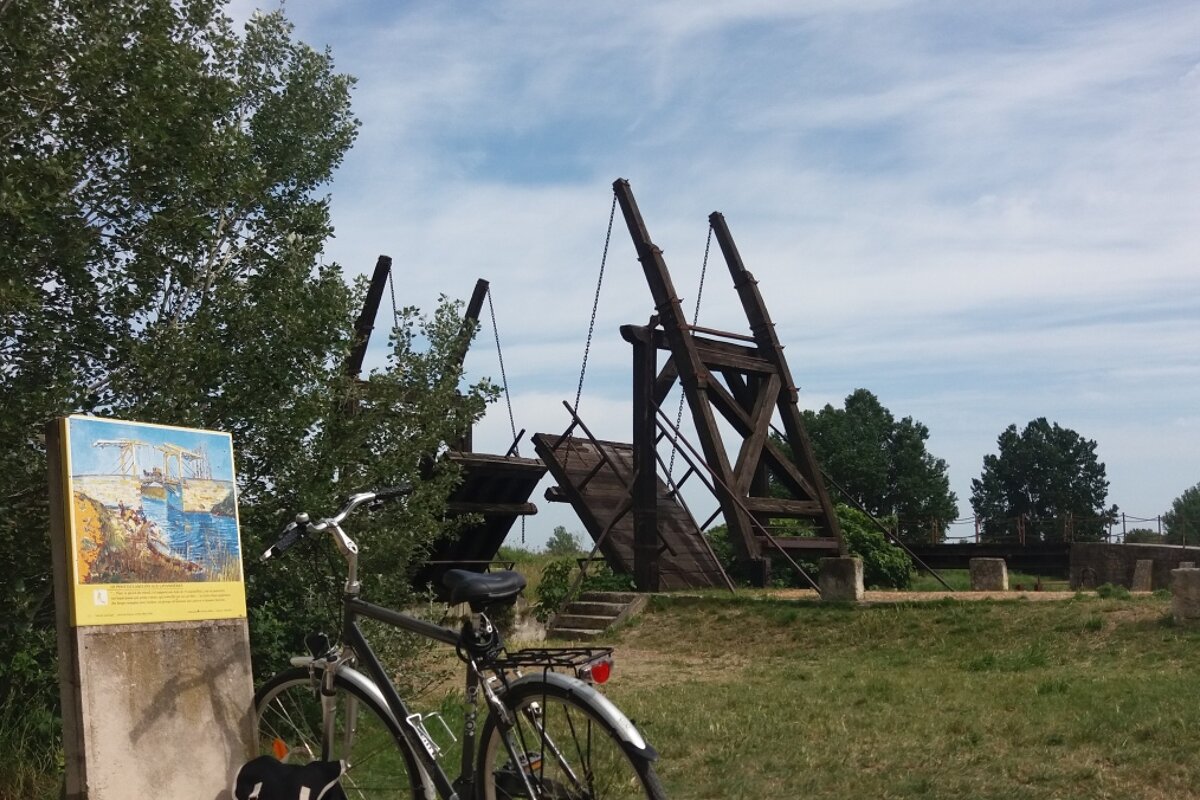
Further outside the town are a few other easels and subjects of Van Gogh’s work which require some form of transport to reach. Namely the Pont du Van Gogh which I took a bicycle out to see, the Dance Hall and the Red Vineyards respectively which are just north of Arles and appear in two of the artists paintings.

a bridge painted by van gogh

Arles isn’t a large city by any means, but it does have a lot within its boundaries. The walking tour is a pleasant stroll and can be broken up into as many parts of the day as required although it is important to bring the essentials along with you like water and sun-cream.

Free walking guides in English and French are available from the Tourist Office.

Arles is easily accessible by train or bus from larger hubs in the area including Avignon and Aix-en-Provence.

image of a village

7. Road Trip from Avignon through the Luberon

Many visitors to Provence start in the historic city of Avignon. Thanks to the TGV train service, you can easily travel from Paris or Marseilles to Avignon, where you will find plenty of car rental companies. From Avignon, you can go on any number of road trips, but one of the most popular is driving east towards the Luberon.

The Luberon is quintessential Provence - it is where the famous book by Peter Mayle 'A Year in Provence' was written, and also where the Russell Crowe film 'A Good Year' was filmed. It's a beautiful region of rolling green hills, historic hilltop villages that have escaped modernity, memorable markets and plenty of sights, both natural and man-made. It is a good trip to choose for those who don't want to spend too much time in the car, as you can drive from one side of the Luberon to the other in less than two hours. But there is so much to explore in the region that we would suggest you take up to a week to explore.

Your first stop could be L'Isle sur la Sorgue, a market town close to Avignon (about 40 minutes drive - head for the A7 south) famous for it's antiques shops & markets. It has a very charming centre, with a canal system and waterwheels. Close by is the smaller village of Fontaine de Vaucluse which lies along the strikingly green Sorgue river. You can walk up the river banks past an old paper mill to view a deep green pool formed by an underground network of streams and rivers.
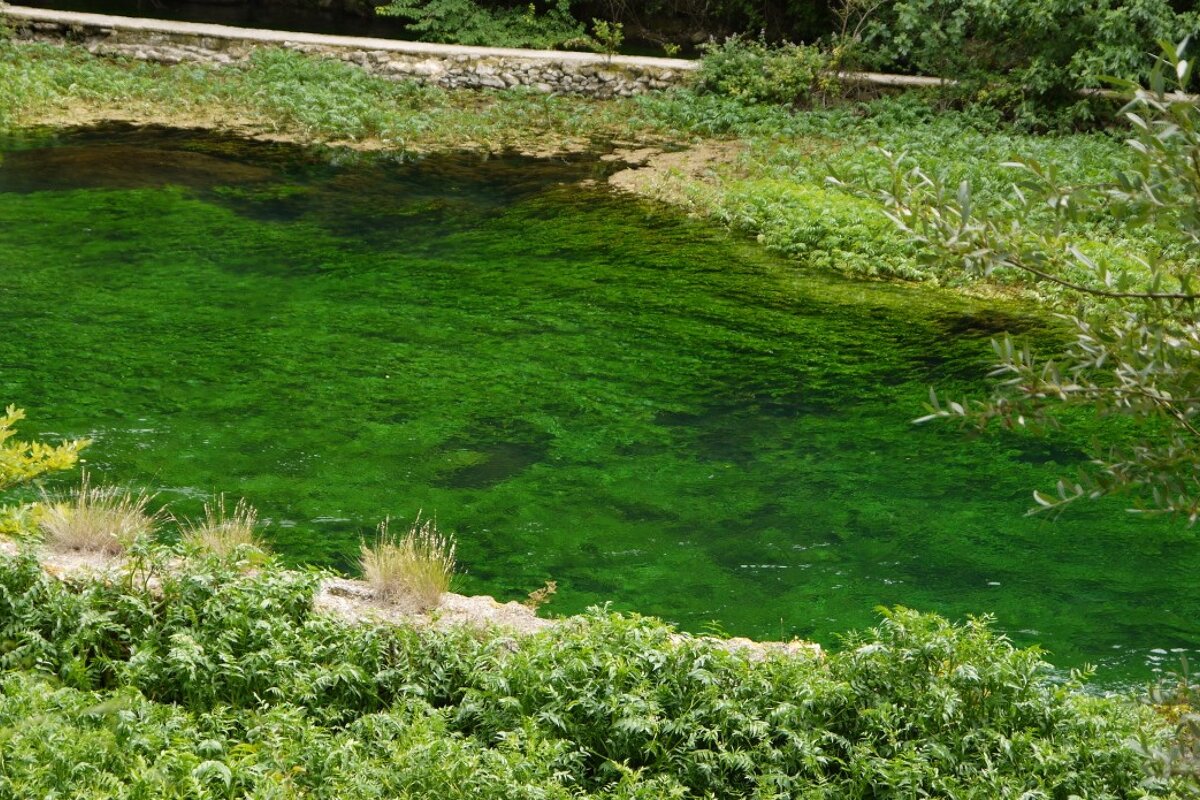
The River Sorgue


From here, venture further east into the heart of the Luberon where you can start to explore the beautiful hilltops villages. First on your list should be Gordes, about 25 minutes drive east of L'Isle dur la Sorgue. This is a very famous hilltop village, a 'Plus Beaux Village' with amazing views, a 16th century castle, charming lanes, and a pretty square with good restaurants. The Cistercian monastery, the Abbaye Notre Dame de Senanque near Gordes is a must-visit and more history awaits at the archaeological remains of the Village des Bories. The area is famed for it's lavender fields (in season June to August) and you can visit a Lavender Museum just outside the village.

Five miles further east from Gordes is Roussillon. The Luberon is laced with red and orange rocks thanks to the presence of ochre pigment, and the best examples can be seen in Roussillon, a wonderful small village popular with artists. There are several ways of exploring the natural red rock formations, by following the Ochre walking trail, or by visiting the Mines de Bruoux (on the road to Apt). Roussillon has several art galleries and good quality souvenir shops.

Continuing east, a short drive will take you to Apt, the main market town in the area. Catch the market on Saturdays, it's one of the biggest in the Luberon and you can find everything from local produce, to brightly coloured linens and arts & crafts. Close to Apt is Raille Lake where you can cool down and enjoy swimming and watersports.
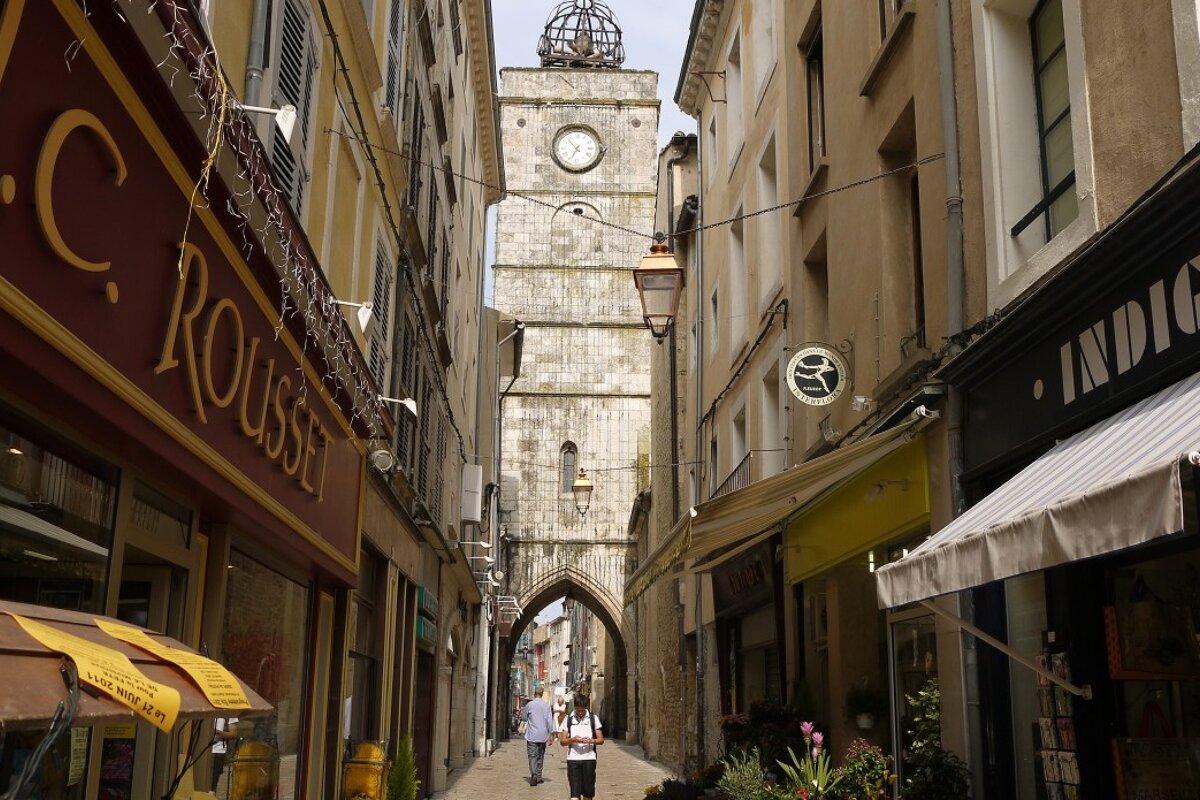
The Market Town of Apt


From Apt, you can continue east towards Manosque, about a 45 minute journey. Manosque is on the edge of the Luberon area and is also a market town, with the main market occurring on Saturdays. The famous Provencal soap company L'Occitane is here and you can visit a museum and boutique to stock up on their products. North of Manosque is Chateau de Savan, an 18th century mansion with pretty gardens. From Manosque you can continue east to explore the stunning Verdon Gorge and all the activities associated with this Natural Park, or head back west to enjoy more of the Luberon.

Heading south-west from Manosque, the small hilltop village of Ansouis (45 minutes away) is worth a stop. It's a very pretty village with an historic castle, and there is also a wine museum at Chateau Turcan. Cucuron is another pretty village nearby, lost in time and wonderfully unspoilt. Five km away is Bonde Lake, an ideal spot for swimming, relaxing and watersports.
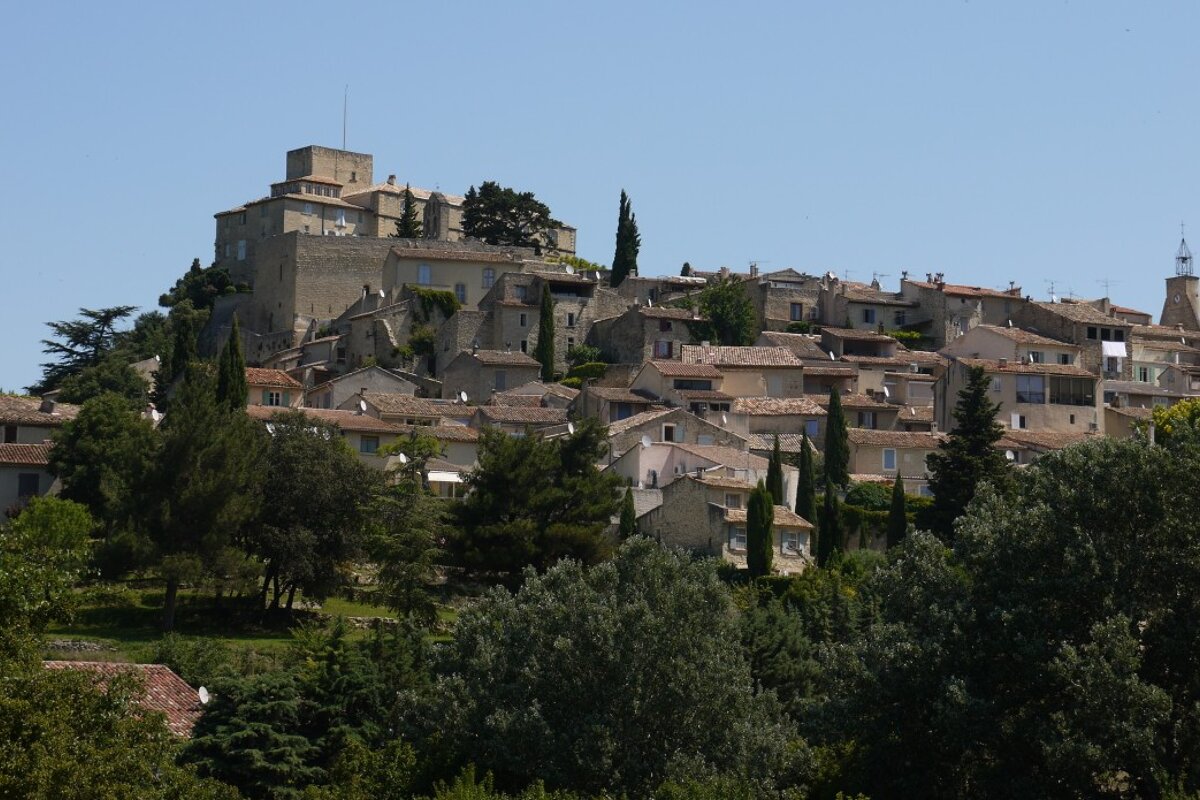
Ansouis Village


10 km back towards the west is the wonderful village of Lourmarin. An immaculate village with a fabulous Renaissance château, Lourmarin is filled with pretty lanes, fountains, boutiques and cafes. It also benefits from having some lovely places to stay. A short drive to the north takes you to another hilltop village, Bonnieux. There are no sights to see as such, but that is just the point. Take your time exploring the lanes and paths that entwine the village. Work your way to the top and enjoy the views - they are some of the best in region. There are also some great hotels to stay in the surrounding countryside.
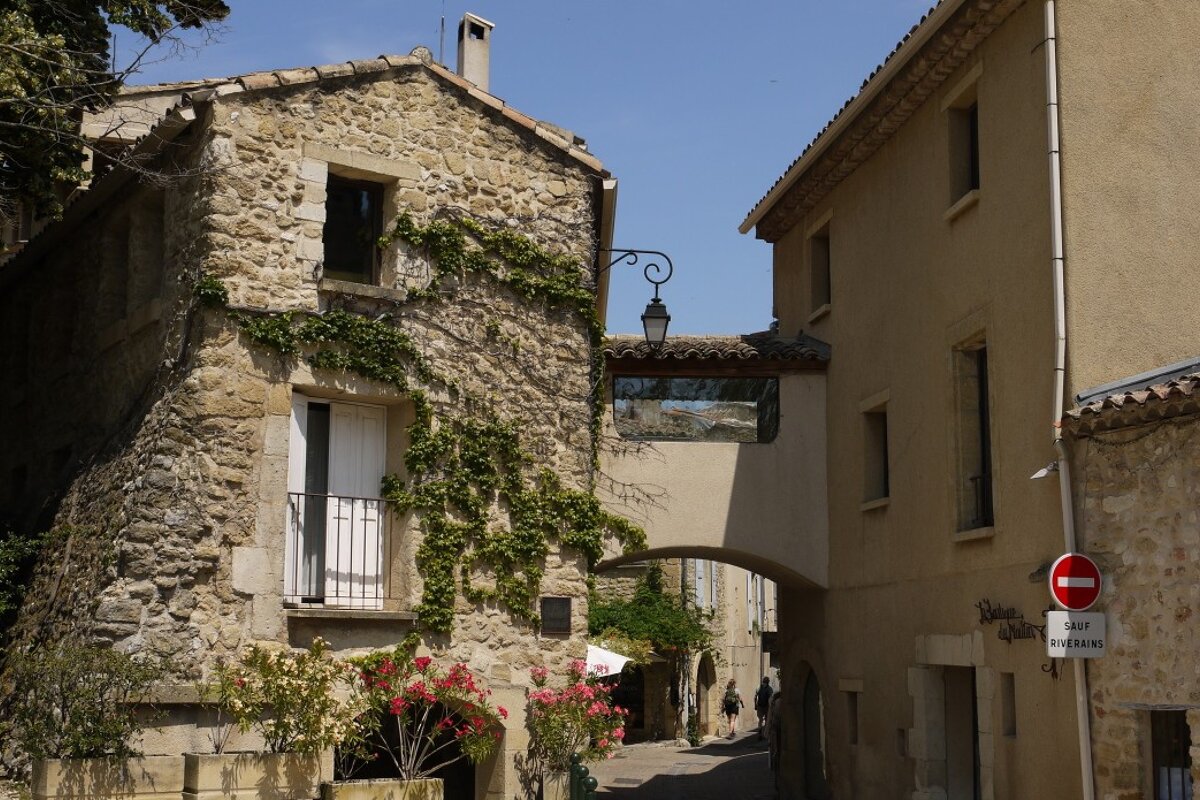
Lourmarin


Two smaller villages close to Bonnieux that are nice to visit are Lacoste, with it's rather fabulous ruined castle that once belonged to the infamous Marquis de Sade, and Menerbes, a medieval 'Plus Beaux Village' with a number of historical buildings. Both are interesting to wander around, exploring the nooks and crannies of the cobbled lanes. From Menerbes, it is about a 45 minute drive back to Avignon.

For the more actively minded, you might want to choose a village to base yourself in, and drive each day to a place of interest. There are many sign-posted hiking trails through the Luberon Natural Park; you can also practise mountain biking and horse riding here. Other activities include tree-top adventure parks (great for families), and golf - there are two courses, one by Manosque in the east, the other by L'Isle sur la Sorgue in the west. There are vineyards in the Luberon, however, they tend to be smaller and less famous than the neighbouring Cotes du Rhone wine region.

Some practical points:
The country roads are delightful, just remember that it can be slow-going in the summer.
The more popular villages tend to have large car parks on the outskirts where you leave your car and walk to the village - normally no more than 500 metres.
Your rental car will come with air conditioning, very important when visiting in the summer when temperatures can rise to over 30 degrees. When choosing a parking spot, try to find a shady one! And do not park facing on-coming traffic, it is illegal in France. For more tips on driving in France, read our guide to Driving in Provence.

There are many Chambre d'Hotes (B&B's) in the area that provide very comfortable accommodation as an alternative to hotels. At lunchtimes, restaurants offer a very well priced 'Menu du Jour' featuring Provencal cuisine, well worth trying!

a stone pile on a trail in Provence

8. Refuge d'Art multi-day walking tour

This walking route is for strong walkers or hikers, and can be completed in anywhere from 8-10 days.

The 150km route and the art along it are the brainchild of British artist Andy Goldsworthy, creating a unique concept in Europe.

Linking up three Sentinels (stone cairns, each one located in the heart of a valley), the circuit follows ancient paths among the remnants of an agricultural way of life that was once intense. Goldsworthy wanted to mark the circuit with Refuges in the form of disused houses belonging to the non-protected rural heritage, including chapels, farms and sheepfolds. These have now been restored, and a specially-designed sculpture has been incorporated into each one. They provide shelter for a pause along the route, or indeed, in some cases, the possibility of an overnight stay.

You can find out more about the route, the refuges and sentinels on the Refuge d'Art website.

a narrow street in provence

9. In the footsteps of Cezanne - A city walk around Aix en Provence

Location
Aix-en-Provence

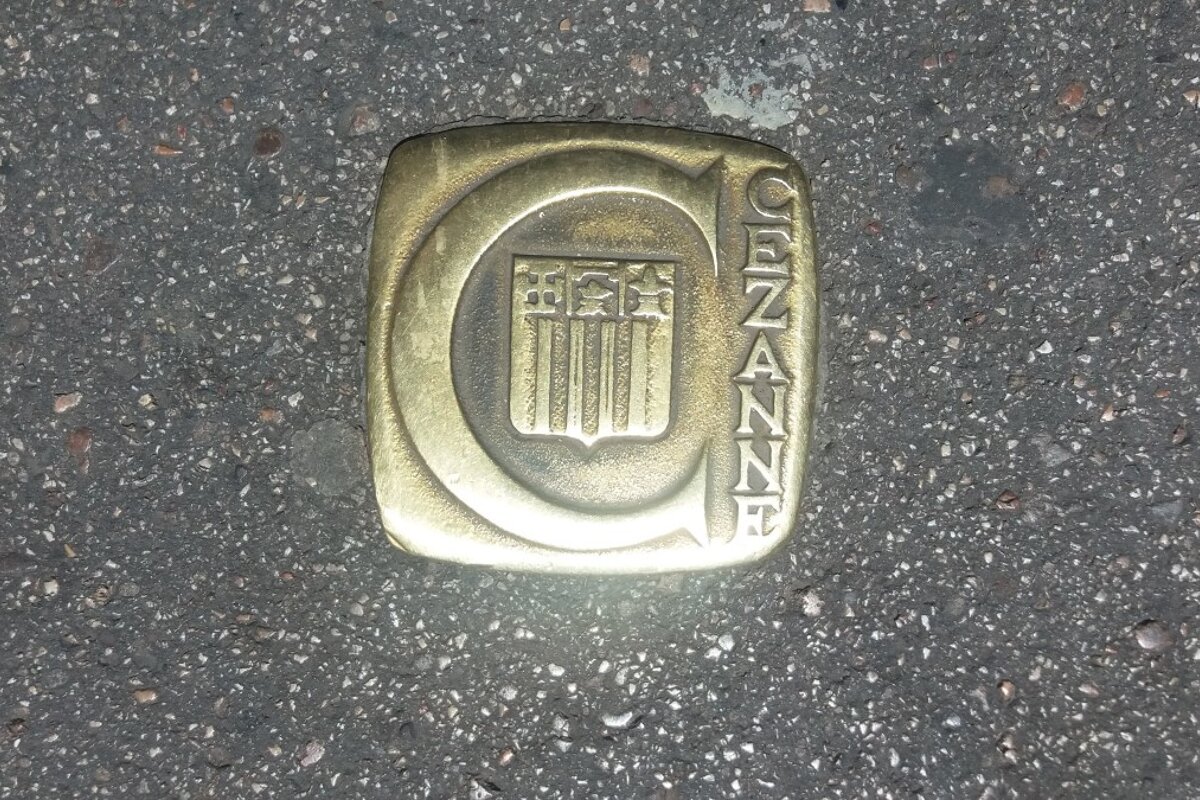
Beginning at the statue of the artist beside Fontaine de la Rotonde; arguably the grandest fountain in Aix, follow the “C” shaped medallions on the ground for a walking tour with a purpose.

The Paul Cézanne statue in Aix could be the centre point of this walking tour with its crafted detail and authoritative style, but counter intuitively the fountain is the starting point for what is an informative and encapsulating walk around the city.

The tour takes us almost across the whole city and everywhere along the way there are points of interest – not just those concerning Cézanne, but those involving the city of Aix en Provence as a whole. It is a great chance to mark down places of interest or restaurants and cafés to come back to during a stay in Aix.

a amrker on the floor for a walking route

The metallic “C” shaped studs on the ground guide us along back streets and along chemins that may have remained mysterious and untracked to casual tourists otherwise. The map for the tour contains accompanying information regarding each feature and facet of Cézanne’s life along the way, from the place of his birth, to the schools he attended and the place of his marriage.

a narrow street in provence

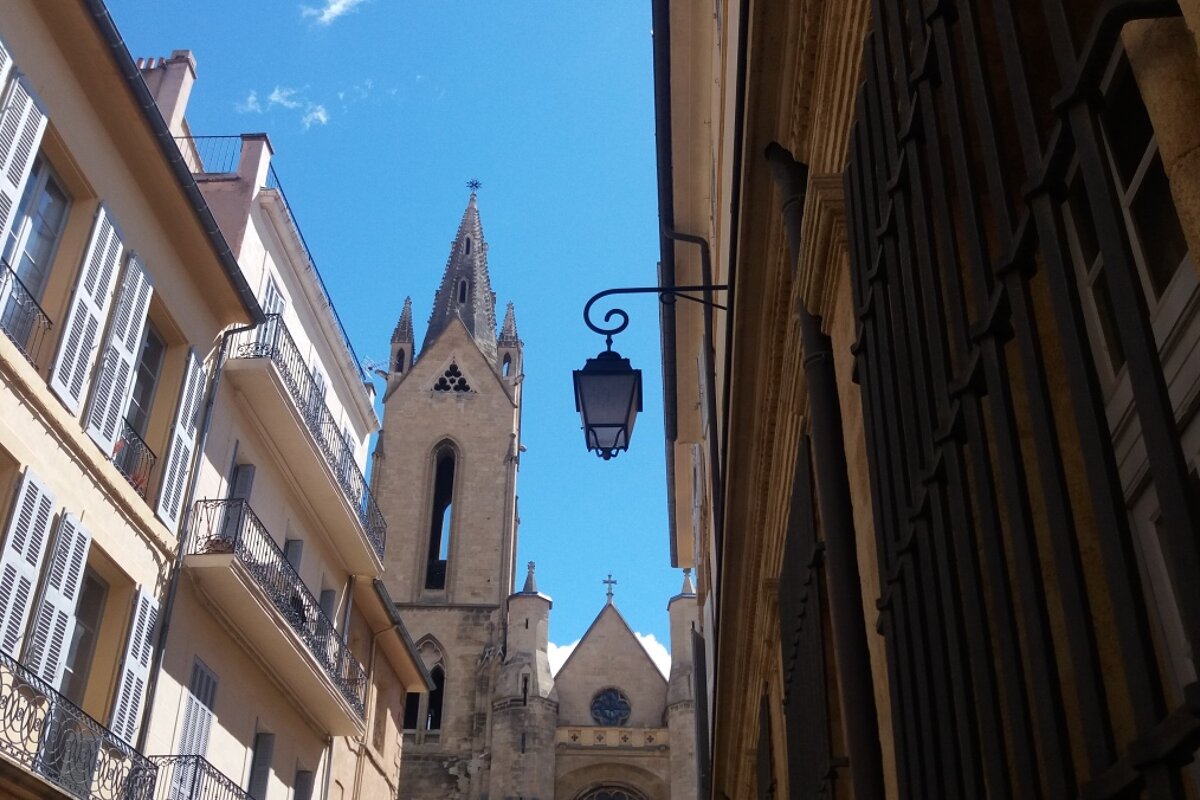
Walking up through the narrow Rue Cardinale, towards the church of St. Jean-de-Malte with the sun glinting all around and the hanging flowers and traditional French street-lights alongside the decorative wrought-iron window guards of the houses, it seems to become clear and to qualify Cézanne’s quote that, “when you are born there [Aix-en-Provence], it’s hopeless, nothing else is good enough”.

The Granet Museum, one of the stops on the tour, is home to a small collection of his work, alongside other notable artists. It is said that a past curator of the museum swore that none of Cézanne’s work would ever be exhibited while he was there to oversee the museum. The museum also shows work by Picasso, Giacometti and has a section dedicated to the work of Granet himself.

The real beauty of the self-guided tour is that it can be as long or as short as you desire. If you want to stop for a drink or some lunch the decision lies only with you. There are a plethora of options for eating, drinking and for ice-creams all over the city and the meandering tour will take you past quite a few.

a restaurant in aix en provence centre

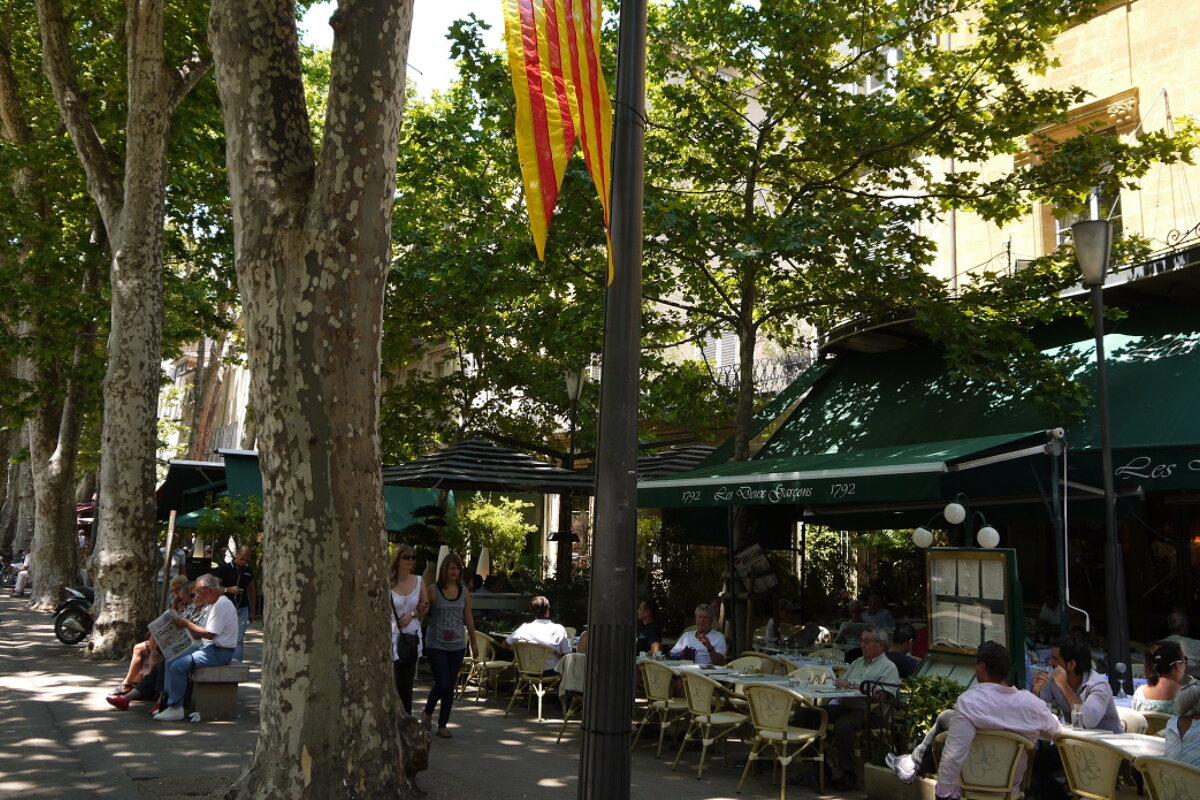
I stopped along the way at Les Deux Garçons restaurant on Cours Mirabeau to sample some of the food at the now famous hang-out of Cézanne and his friends. Ernest Hemingway is also said to have enjoyed this particular establishment - and it is not hard to see why it attracts this calibre of clientele as the interior is sophisticated and luxurious and there is a grand terrace at the front to enjoy the sunshine.

Some of the tour’s charm, besides walking along the beautiful streets and admiring the buildings, comes from navigating your way through Aix aided only by the map and the plaques on the ground. Kids especially will love the adventure of hunting for the next stop on the map.

a marker on a wall for a museum

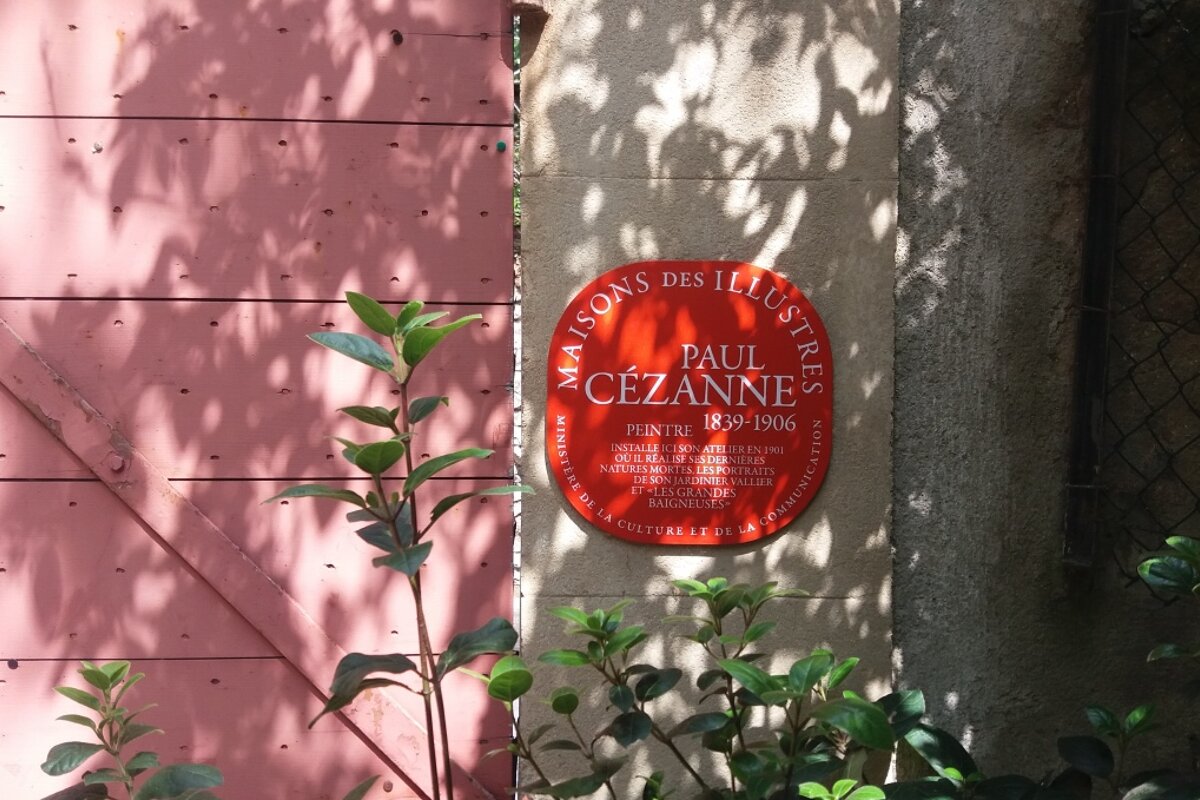
The end of the tour brings you 1.5km out of the town to Atelier Cézanne which is well worth a visit in its own right. It is the studio where Cézanne worked until he died and the contents of which have been preserved as best as possible. It is a fantastic way to finish the walking tour and fans of the artist will come away with a higher understanding of the artist’s life.

The Footsteps of Cézanne walking tour could be also be transformed into a bicycle tour if you desire by hiring a bicycle from the many locations around Aix.

The walking tour is free – pick up the accompanying map from the Tourist Office and begin the tour by the Fontaine de la Rotonde.